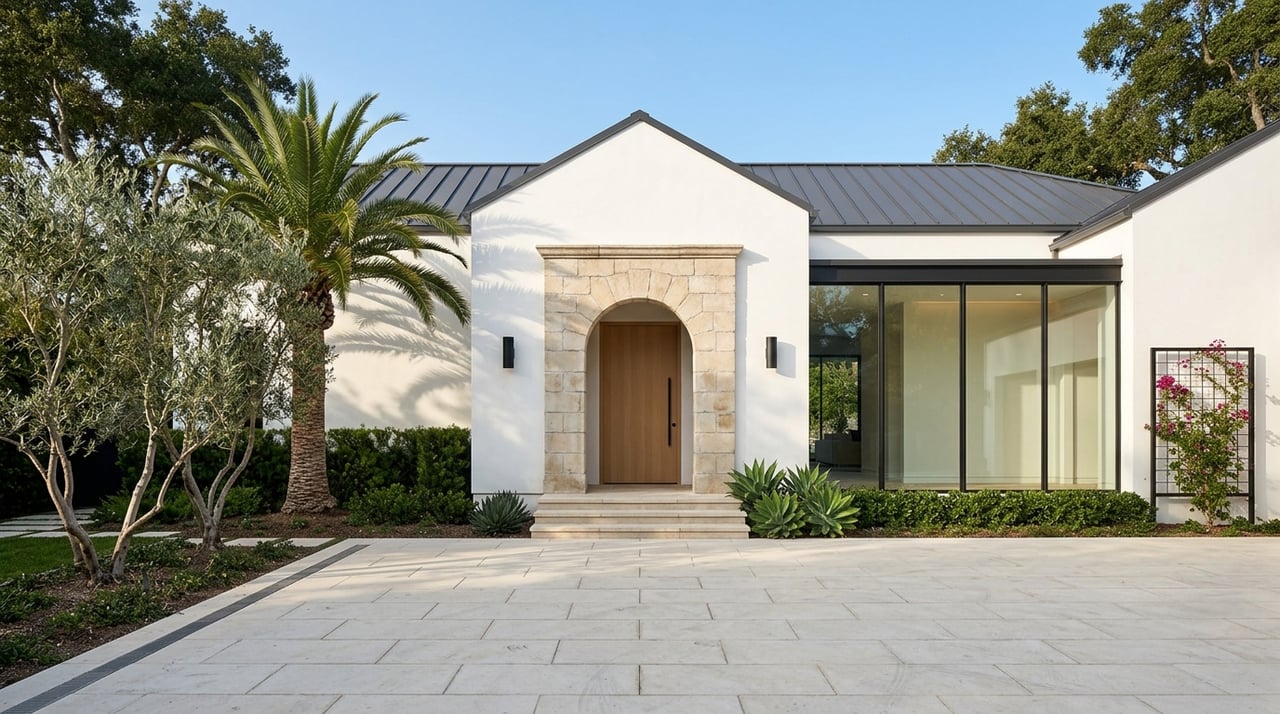
If you are weighing new construction against a historic estate in Bel Air, you are asking the right question. In this part of Los Angeles, the choice is rarely just about age. It is about privacy, design, upkeep, and how you want to live day to day. This guide will help you compare both paths with a clear Bel Air lens so you can move forward with more confidence. Let’s dive in.
Bel Air offers both legacy and modern estates
Bel Air is not a neighborhood defined by one single era. According to Los Angeles City Planning, the original Bel Air Estates subdivision dates to 1922 and was planned with large irregular parcels, winding hillside streets, underground utilities, and strong privacy features like hedges, walls, and gates.
That early planning still shapes the area today. City planning also notes that many original homes have been demolished and replaced with larger newer residences, often after lot consolidation. For you as a buyer, that means Bel Air already supports both preserved older estates and newer trophy homes.
The market is tiered, not uniform
Bel Air pricing can look inconsistent at first glance, but that is part of the story. As of spring 2026, Redfin reported a median sale price of $3.1 million, Zillow’s home value index was $4.17 million, and Realtor.com showed a $6.50 million median listing price with 153 homes for sale.
Those numbers track different slices of the market, so the spread is best understood as evidence of a layered luxury market. In practical terms, you are not shopping in one simple price band. You are choosing among very different homes, lot profiles, view corridors, and levels of finish.
Why new construction appeals to luxury buyers
Turnkey living is a major advantage
For many buyers, new construction offers the easiest day-one experience. You are more likely to find current floor plans, newer systems, and fewer immediate repair needs. That can be especially attractive if you want a home that feels ready from the moment you close.
This also fits the broader Los Angeles luxury market. Realtor.com’s 2026 luxury outlook noted that the luxury segment has stabilized, more than half of Los Angeles listings are above $1 million, and cash purchases are especially common above $2 million. In a market where buyers can afford to be selective, turnkey convenience carries real weight.
Energy performance can be stronger
New homes may also bring measurable efficiency advantages. The EPA says ENERGY STAR certified homes are designed to exceed minimum energy code requirements by at least 10% and are independently verified for insulation, windows, air sealing, and HVAC performance.
The EPA also says ENERGY STAR residential new construction and Indoor airPLUS are intended to improve energy efficiency, durability, and health protections. The U.S. Department of Energy adds that its Efficient New Homes label supports reduced maintenance and repair costs through moisture protection, high-performance assemblies, and third-party inspections.
Bel Air new builds are often redevelopment plays
In Bel Air, a newer home is often more than just a younger version of an older one. City planning history indicates that many older homes in the original district have been replaced, sometimes after lot consolidation. That means some new construction homes are really the result of a larger redevelopment strategy.
For you, that can affect scale, siting, and presence. A new build may offer contemporary amenities and dramatic volume, but it may also reflect a very different vision than the home that originally occupied the site.
What to check before buying new construction
Newer does not mean no due diligence
A new home can reduce near-term upkeep, but it does not remove hillside risk. CAL FIRE says fire hazard mapping considers vegetation, terrain, weather, and related factors, and that defensible space and home hardening can materially improve survivability.
In a hillside market like Bel Air, you should verify more than finishes and appliances. Slope conditions, drainage, wildfire mitigation, and access all deserve close review, even when a home is newly built.
Focus on practical site questions
As you compare properties, keep your attention on the lot as much as the structure. In Bel Air, site conditions often shape daily comfort and long-term ownership more than buyers expect.
A thoughtful review may include:
- Wildfire mitigation features
- Defensible space around the home
- Drainage patterns on and around the lot
- Driveway and emergency access
- Slope stability and hillside conditions
- The relationship between views and privacy
Why historic estates still command attention
Provenance can matter as much as square footage
Bel Air’s older homes attract buyers for reasons that go beyond age. SurveyLA identified significant Mid-Century Modern residences in the Bel Air-Beverly Crest area, including work by Frank Lloyd Wright Jr., Craig Ellwood, Richard Neutra, and Richard Dorman. It also recorded traditional custom ranch houses by Gerard Colcord, Wallace Neff, and Arthur and Joseph Kelly.
That range matters if you care about architecture. Bel Air does not offer just one historic style. It offers multiple design lineages, each with its own appeal, materials, and sense of authorship.
Some homes have true collector appeal
Certain residences stand out because of design pedigree and integrity. The LA Conservancy highlights the Backus House, designed by Greta Magnusson Grossman, and the Shepherd Residence, a highly intact 1938 Bel Air home by William J. Gage.
The Conservancy also notes that some significant Bel Air homes are understated from the street and become more expressive at the rear, especially on view lots. If you value privacy and architectural surprise, that pattern may feel especially compelling.
What comes with owning a historic home
Stewardship is part of the experience
A historic or architecturally notable estate can offer depth, character, and authenticity that new construction may not replicate. At the same time, ownership usually involves more care. The National Park Service says preservation focuses on maintaining a property’s existing form, materials, integrity, and features, with ongoing repair emphasized over extensive replacement.
That does not mean living in the past. It means updates are often approached with more restraint and sensitivity, especially when original details contribute to the home’s significance.
Review processes may affect renovations
If a property is within an HPOZ, Los Angeles applies an added planning layer. City rules require exterior work, landscaping, additions, alterations, and new construction to complement historic character and go through review.
That is important to know early. If you are considering major exterior changes, guest house work, or a broader redesign, the approval path may be more nuanced than it would be at a non-designated property.
Tax incentives may exist in some cases
If a property qualifies, the Mills Act may help offset carrying costs. Los Angeles City Planning says it has been the city’s primary historic preservation incentive since 1996 and can provide property tax savings through a renewable 10-year contract that transfers to a new owner when the home is sold.
This benefit is not automatic. You should confirm whether the home is formally designated and whether a Mills Act contract is actually in place before relying on any savings in your ownership math.
Privacy in Bel Air depends on more than age
In Bel Air, privacy is often created by the land itself. Los Angeles planning materials emphasize irregular parcels, winding streets, and privacy walls, gates, and hedges. SurveyLA also notes that many notable homes are oriented toward the rear to capture views and reveal little from the street.
That means both new and historic homes can feel exceptionally private. The real difference is usually how the privacy is achieved, whether through mature landscaping, lot geometry, long setbacks, gate placement, or the home’s orientation on the site.
How to decide which path fits you
New construction may fit you if you want simplicity
If your priority is ease, a new home may be the better match. You may prefer contemporary systems, stronger energy performance, and fewer near-term projects. You may also want a more turnkey ownership experience with less immediate stewardship.
This path often appeals to buyers who value modern amenities and speed. If you want to settle in quickly and focus on lifestyle rather than restoration, new construction can make a lot of sense.
Historic estates may fit you if you value character
If you are drawn to architecture, craftsmanship, and provenance, an older estate may be more rewarding. You may appreciate the design story, the materials, and the individuality that come with an earlier era.
This path tends to suit buyers who are comfortable with more nuanced upkeep and, in some cases, planning review. If you see the home as both a residence and a work of design, stewardship may feel less like a burden and more like part of the value.
Questions to ask on every Bel Air tour
Whether you lean modern or historic, ask focused questions during showings and private previews. In this market, details that seem small at first can shape long-term satisfaction.
Use this checklist as a starting point:
- How is privacy created on this lot?
- What site conditions should be reviewed more closely?
- Has the home undergone major redevelopment or lot consolidation?
- Are there known wildfire mitigation features in place?
- Is the property historically designated or subject to HPOZ review?
- If the home is older, what has been preserved and what has been updated?
- If tax benefits are mentioned, is there an active Mills Act contract?
Bel Air gives you a rare choice between curated modern living and architectural lineage. The right answer depends less on whether a home is old or new and more on how well it aligns with your priorities for privacy, performance, design, and long-term ownership. If you want discreet guidance on Bel Air estates, off-market opportunities, or architecturally significant homes across the Westside, Nichole Shanfeld can help you evaluate the options with clarity and care.
FAQs
Is a Bel Air older home automatically historic?
- No. Los Angeles planning notes that the original Bel Air Estates area is a significant planning district, but formal preservation rules depend on a property’s actual designation or overlay.
Does Bel Air new construction require less due diligence?
- No. Even newly built hillside homes should be reviewed for wildfire exposure, defensible space, access, drainage, and slope-related conditions.
Can a Bel Air historic estate be updated for modern living?
- Yes. Updates are possible, but preservation standards favor sensitive changes, and exterior work in an HPOZ is reviewed for compatibility with historic character.
Does build year determine Bel Air home value?
- Not by itself. Current market data suggests that land, views, design quality, condition, and buyer demand can matter more than age alone.
Is privacy better in Bel Air new builds or historic estates?
- Either can offer strong privacy. In Bel Air, privacy often depends more on lot geometry, screening, siting, and orientation than on whether the home is new or older.