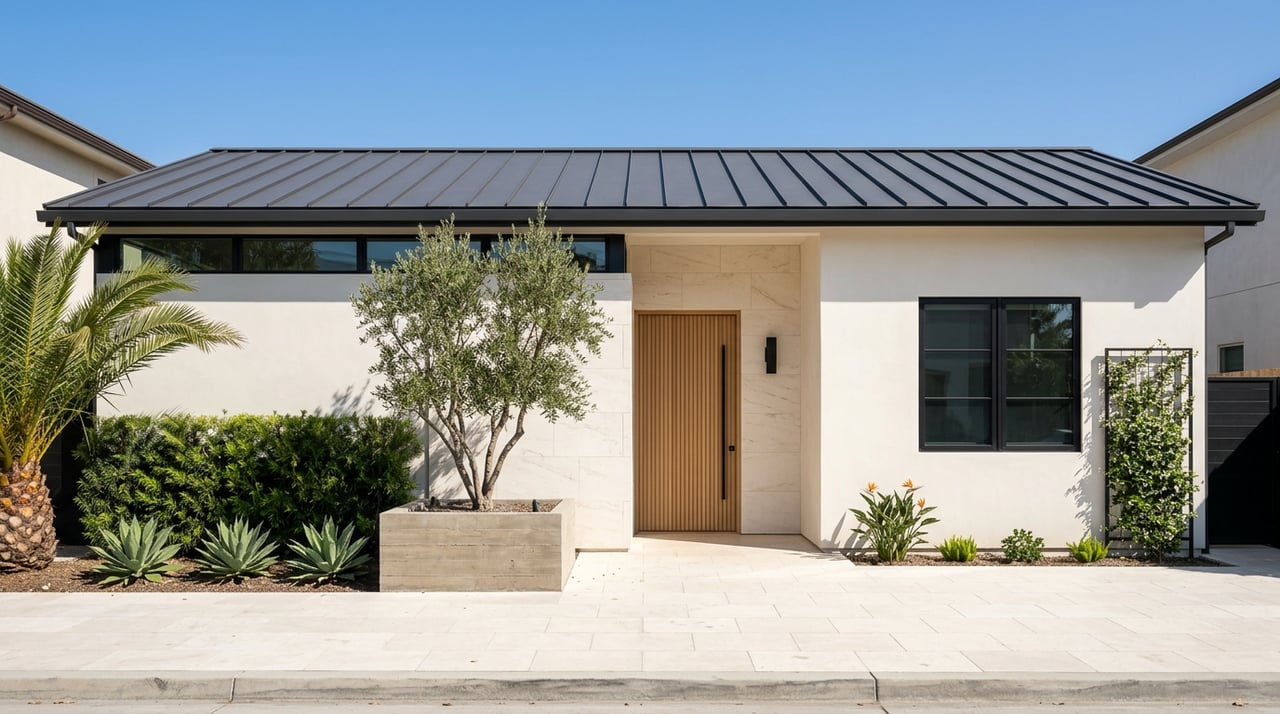
What makes Brentwood luxury homes so distinctive? It is not one signature look or one type of street. In Brentwood, architecture changes with the land, the era of development, and the kind of lifestyle a property was designed to support. If you are buying, selling, or simply studying the neighborhood, understanding those patterns can help you read a home more clearly. Let’s dive in.
Brentwood style starts with the land
Brentwood is shaped by rolling terrain, canyon settings, and lower-density residential development. City planning documents and SurveyLA describe a neighborhood with gridded streets in some areas, gently curving tracts in others, and hillside roads that become more dramatic north of Sunset and near the canyon edges.
That built geography matters because it helps explain why Brentwood never settled into a single architectural identity. Instead, the neighborhood developed in layers. Flat early tracts often favor traditional estates, while postwar hillsides and canyon sites gave rise to ranch homes, mid-century modern houses, and later contemporary custom builds.
Traditional estates in early Brentwood
Brentwood Park set the prestige tone
If you picture classic Brentwood estate living, Brentwood Park is often the reference point. SurveyLA notes that this tract, announced in 1906, featured wide curved streets, landscaped circles and ovals, varied lots, and strict setbacks, all of which created a composed estate setting.
By the 1920s, prominent architects were designing substantial homes there in Period Revival styles. The area includes homes associated with American Colonial, Spanish Colonial, Tudor, early Modern, and Ranch influences, which shows that even Brentwood’s most established estate pocket has architectural range.
Why traditional homes fit these lots
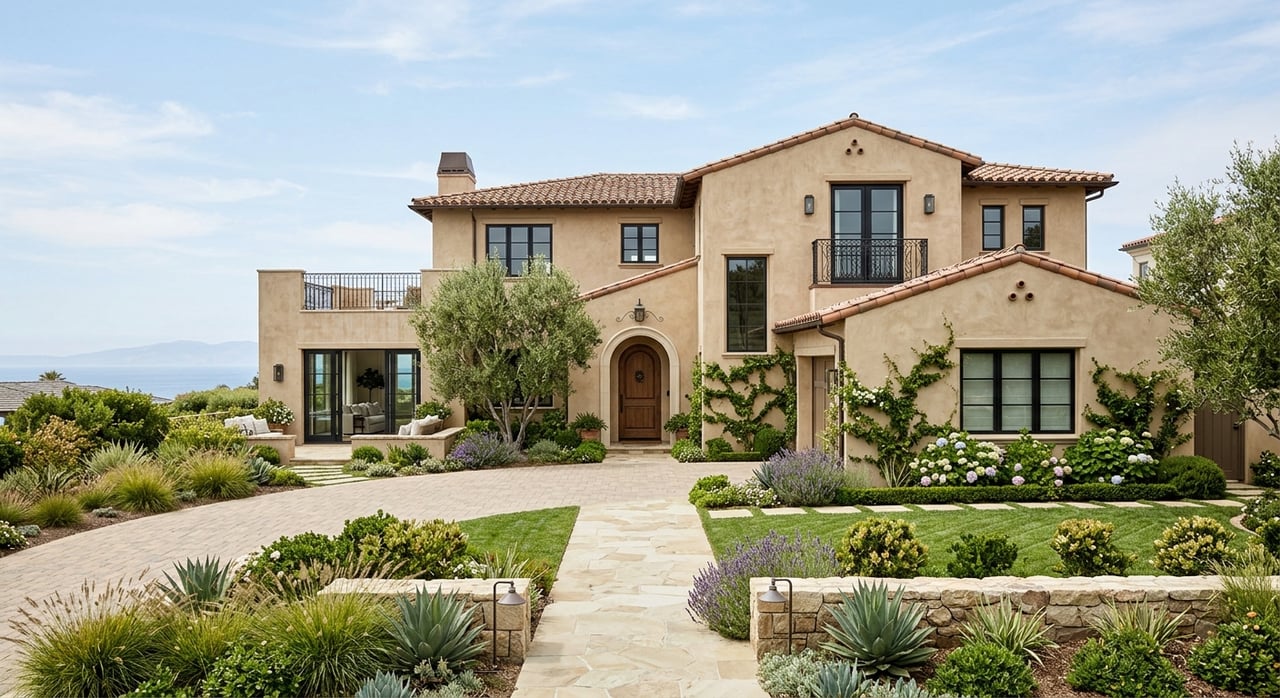
Traditional estate architecture tends to work well on broader, flatter parcels where symmetry, setbacks, and formal arrival sequences can be fully appreciated. In Brentwood, that is especially true in older prestige tracts where the streetscape was planned to support large homes with landscaped frontage.
Day to day, these homes often feel more formal than hillside properties. Room layouts may be more segmented, entertaining spaces can feel more ceremonial, and outdoor areas often read as lawns, courtyards, or patios framed by the architecture.
Where you tend to see traditional estates
In Brentwood, traditional and revival-style estates are most often associated with:
- Brentwood Park
- West of Barrington between San Vicente and Sunset
- Barrington Place, Carmelina Avenue, and parts of Mandeville Canyon Road
Ranch homes and Brentwood’s canyon history
Ranch style arrived naturally here
Ranch homes are a major part of Brentwood’s architectural story, especially north of Sunset. Los Angeles historic context materials describe ranch houses as one-story, horizontally oriented homes with rambling layouts and strong connections to the outdoors.
In Brentwood, that style aligns closely with the neighborhood’s canyon and equestrian past. SurveyLA links ranch development to horse properties and larger, less formal sites, particularly in the canyons where homes could spread outward rather than stack upward.
The luxury-ranch side of Brentwood
Ranch architecture in Brentwood is not limited to modest postwar housing. Southdown Estates, near Sunset and Bienveneda, was launched in 1952 as a luxury-grade subdivision of Traditional ranch-style homes, with 89 lots planned on a former estate site.
That history matters because it shows how the ranch style adapted to the luxury market here. In Brentwood, a ranch home can feel relaxed and informal while still carrying scale, privacy, and architectural presence.
How ranch homes live
A well-sited ranch house often feels easy and natural to live in. The one-story plan, long roofline, and indoor-outdoor orientation can make daily movement feel simple and comfortable, especially when the home opens to gardens, pools, or broad rear yards.
In Brentwood, that lifestyle tends to read most clearly on greener, wider lots where the house sits low in the landscape. The style feels especially at home where the site itself supports a spread-out plan.
Where ranch homes appear most often
You are more likely to see ranch influences in:
- Mandeville Canyon and upper canyon roads
- Kenter Canyon and upper Brentwood hills
- The Sunset and Bienveneda area
Mid-century modern is Brentwood’s clearest signature
Crestwood Hills defines the movement
Among Brentwood luxury home styles, mid-century modern may be the most architecturally distinctive. Crestwood Hills stands out as the neighborhood’s most important modernist enclave.
The Los Angeles Conservancy describes Crestwood Hills as a cooperative housing project formed in 1946 that purchased 800 acres in the Santa Monica Mountains and hired A. Quincy Jones and Whitney R. Smith. The architects developed house plans with open layouts, broad glass walls, exposed concrete block, redwood siding, and Douglas fir ceiling planks.
A design language shaped by privacy and views
Crestwood Hills was not only about style. It was also about how homes relate to the street and the hillside. The neighborhood’s rules limited houses to one story from the street and often placed them at a 45-degree angle to improve privacy and access to views.
That planning approach helps explain why Brentwood mid-century homes still feel so site-specific. They are often less about formal presentation and more about light, orientation, and the connection between interior spaces and the landscape.
Beyond Crestwood Hills
Mid-century modern architecture appears elsewhere in Brentwood as well, especially on hillside streets that capitalize on canyon and city views. SurveyLA identifies examples by notable architects including Richard Neutra, Craig Ellwood, Raymond Kappe, and A. Quincy Jones.
One of the strongest single-house references is the Sturges House in Brentwood Heights. Frank Lloyd Wright’s 1939 Usonian design sits on a steep hillside as a single-story pavilion with a large cantilevered deck extending over the canyon.
How mid-century homes feel to live in
In practical terms, mid-century homes in Brentwood often feel bright, open, and private. The design typically centers on glass, decks, and flowing common spaces rather than formal room divisions.
That makes them especially appealing to buyers who value architecture as a lived experience. In many cases, the views, the light, and the siting are just as important as the square footage.
Where to look for mid-century modern homes
This style is most closely associated with:
- Crestwood Hills and upper Kenter Canyon
- Brentwood Heights and the Skyewiay Road area
- Hillside streets such as Tigertail, Brooktree, Leonard, and Rochedale
Contemporary custom homes continue the hillside story
Today’s luxury homes build on older patterns
Contemporary Brentwood homes often feel like the current chapter of the neighborhood’s hillside modernism. These properties are frequently built on steep or view-oriented lots and use terraces, multilevel massing, and large expanses of glass to engage the site.
Rather than replacing Brentwood’s architectural history, many of these homes extend it. They respond to the same conditions that shaped earlier modern houses: slope, privacy, landscape, and views.
What defines the contemporary Brentwood look
Recent Brentwood examples show the pattern clearly. In Crestwood Hills, KAA’s Tigertail residence unfolds across three tiers on a sloped site, with interior spaces opening to terraces and decks. A 2025 Brentwood estate on Kenter Avenue similarly uses a secluded knoll setting, broad views, floor-to-ceiling glass, and outdoor amenities as central design features.
These homes are often less about one strict style label and more about performance. The architecture is designed to maximize the parcel, draw in natural light, and support entertaining across indoor and outdoor zones.
Not always pure modern
One useful detail about Brentwood’s newer luxury homes is that they are not always purely modern in appearance. A recently profiled residence blended French, English, and California contemporary influences while still relying on walls of glass, indoor-outdoor dining, a two-story atrium, and a courtyard pool sequence.
That hybrid quality says a lot about Brentwood today. Many of the newest homes combine traditional references with contemporary planning, especially when privacy, presentation, and view orientation are key priorities.
Where contemporary custom homes cluster
You will often find these homes in:
- Brentwood Hills and the upper Kenter corridor
- Crestwood Hills renewals and rebuilds
- Other north-of-Sunset view lots
Why style in Brentwood is rarely random
One of the most useful ways to understand Brentwood luxury homes is to stop thinking in terms of one neighborhood-wide look. Brentwood is better understood as a set of micro-environments shaped by terrain and development era.
A broad estate lot in an early tract invites a different house than a steep canyon parcel. That is why traditional estates feel natural in Brentwood Park, why ranch homes suit canyon settings, why mid-century modern thrives on the hillsides, and why contemporary custom homes continue to rise on view lots north of Sunset.
For buyers, that framework can help you match the right pocket to your lifestyle and design priorities. For sellers, it can sharpen how a home should be positioned, presented, and discussed in the market.
If you are evaluating a Brentwood property through the lens of architecture, provenance, and placement, the most important question is often not just what style is this home? It is why does this style belong on this lot?
For private guidance on Brentwood estates, architecturally notable homes, and discreet access to design-driven opportunities across the Westside, connect with Nichole Shanfeld.
FAQs
What architectural styles define Brentwood luxury homes?
- Brentwood luxury homes are most often defined by traditional estates, ranch homes, mid-century modern houses, and contemporary custom homes, with each style tied closely to the area’s terrain and development era.
Where are traditional estate homes most common in Brentwood?
- Traditional estate homes are most strongly associated with Brentwood Park, west of Barrington between San Vicente and Sunset, and several older San Vicente-adjacent streets with larger lots and established setbacks.
Why is mid-century modern important in Brentwood?
- Mid-century modern is especially important in Brentwood because Crestwood Hills is one of the neighborhood’s standout architectural enclaves, and many hillside homes were designed to emphasize views, privacy, and indoor-outdoor living.
Which Brentwood areas tend to have ranch-style luxury homes?
- Ranch-style luxury homes are most often linked to Mandeville Canyon, upper canyon roads, Kenter Canyon, upper Brentwood hills, and the Sunset and Bienveneda area.
How do contemporary Brentwood homes differ from older modern homes?
- Contemporary Brentwood homes often continue the hillside, view-oriented design approach of earlier modern homes, but they are more likely to use multilevel layouts, large glass openings, terraces, and amenity-focused indoor-outdoor planning.
What should buyers look for when comparing Brentwood home styles?
- Buyers should look at how the architectural style relates to the lot, including terrain, privacy, views, outdoor space, and the overall way the home is designed to live on that specific site.